
Civilian Airports / Read File
Read File
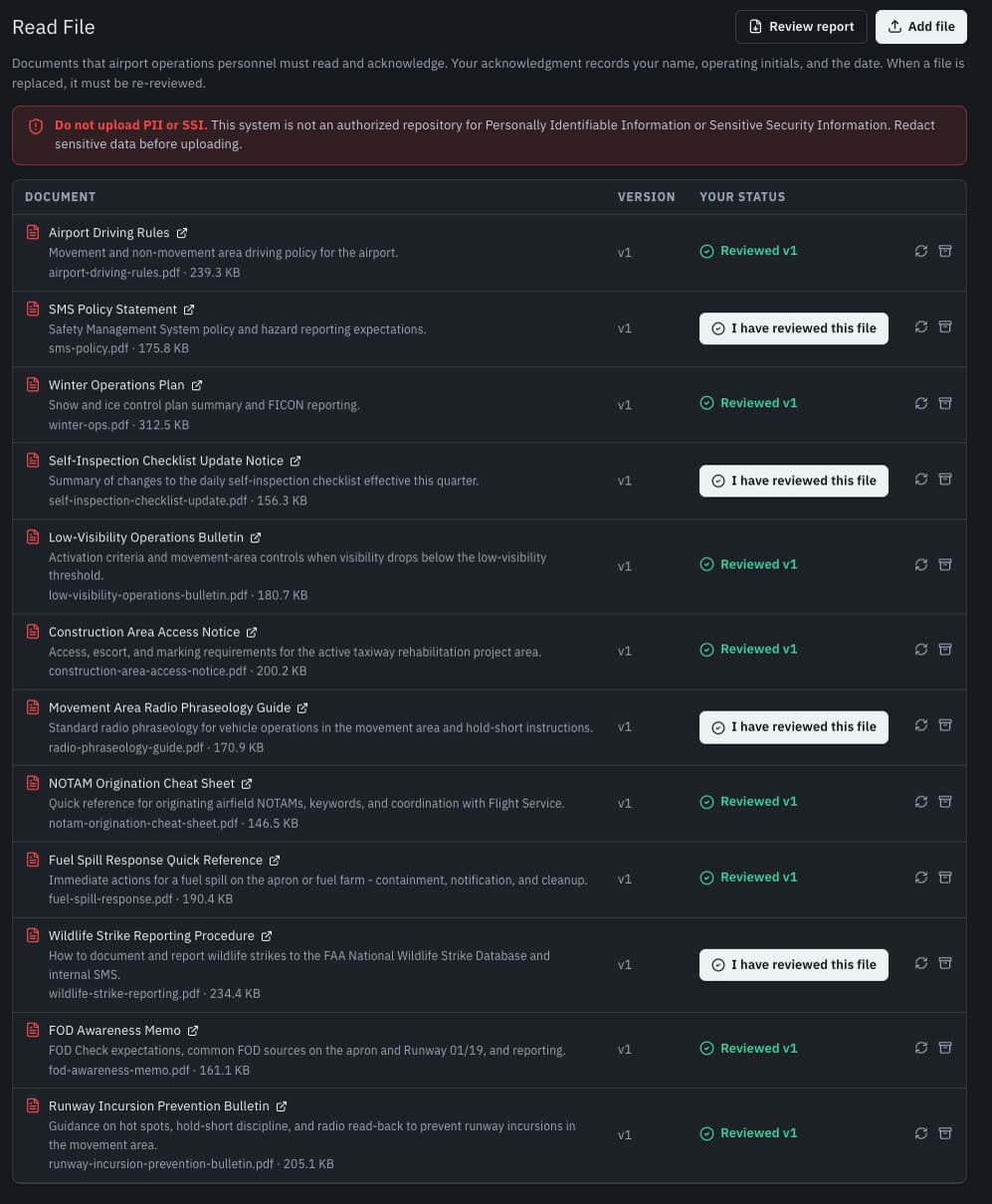
Required reading tracked to the person: acknowledgment records the reader, their initials, and the date.
Nobody can prove required reading happened
An updated SMS policy or a new winter operations plan goes out, and everyone on staff is supposed to read it, but the only evidence that they did is usually a sign-in sheet, or somebody's word for it.
That evidence expires the moment the document changes, too. Update the plan and every acknowledgment already on file now refers to a version nobody's supposed to be working from, with no automatic flag until an inspector, or a mistake, catches it first.
One list, one action, a record that keeps up with revisions
Every required document, in a single table
Driving rules, an SMS policy statement, a winter operations plan, anything else routed for required reading, all sit in one table with the current version number attached.
One click, tied to a real person
The record comes from one click: selecting "I have reviewed this file" attaches a name, operating initials, and a date to that version, with nothing else to keep in sync afterward.
A new version means everyone reads it again
Upload a replacement and the acknowledgments already on file stop applying to it. Whoever read the previous version has to acknowledge the new one before they count as current again.
A report that says exactly who's behind
Run Review report and get back a PDF: every routed document, every person who owes a read, marked current or still pending, with the date and initials once it's done.
What it automates
A read is a fact, not a claim
Each acknowledgment carries a name, operating initials, and a date, tied to the specific version of the document that person reviewed.
A revision can't coast on an old acknowledgment
Swap in an updated document and its acknowledgment history doesn't carry over: every person who read the last version starts over on the new one.
Who's behind is already on the report
Review report turns "who hasn't read this yet" into a one-click PDF covering every document and every person on staff, no individual follow-up required.
Straight answers
What information does an acknowledgment capture?
Selecting "I have reviewed this file" attaches the reader's name, operating initials, and the date to the version they reviewed.
Does replacing a document carry old acknowledgments forward?
No. Uploading a new version clears the acknowledgment status for everyone, so each person has to review the replacement before they count as current again.
How do I find out who still needs to read something?
Pull Review report. It generates a PDF marking each person against each document as current or still pending, with the date and initials once they've acknowledged it.
What file types can I upload?
Documents up to 25 MB in PDF, image, Excel, or Word formats are all accepted, and swapping in a newer version later uses its own separate action.