
Civilian Airports / AEP
Airport Emergency Plan (AEP)
Airport Emergency Plan management, exercise-ready and aligned to the emergency-plan requirement.
An emergency plan that's only opened during an emergency is already behind
§139.325 doesn't just require a plan on file. It requires a full-scale exercise on a 36-month cycle, a monthly communications check against every response agency on the roster, and a plan that stays current between annual reviews. Missing any one of those quietly becomes the first thing an inspector finds.
And a plan, its drills, and its comms checks are three different records if nothing connects them. Proving the whole program is current means pulling all three together by hand, usually right when there's no time for it.
The whole exercise program, tracked against its own clock
Plan status with its own countdown
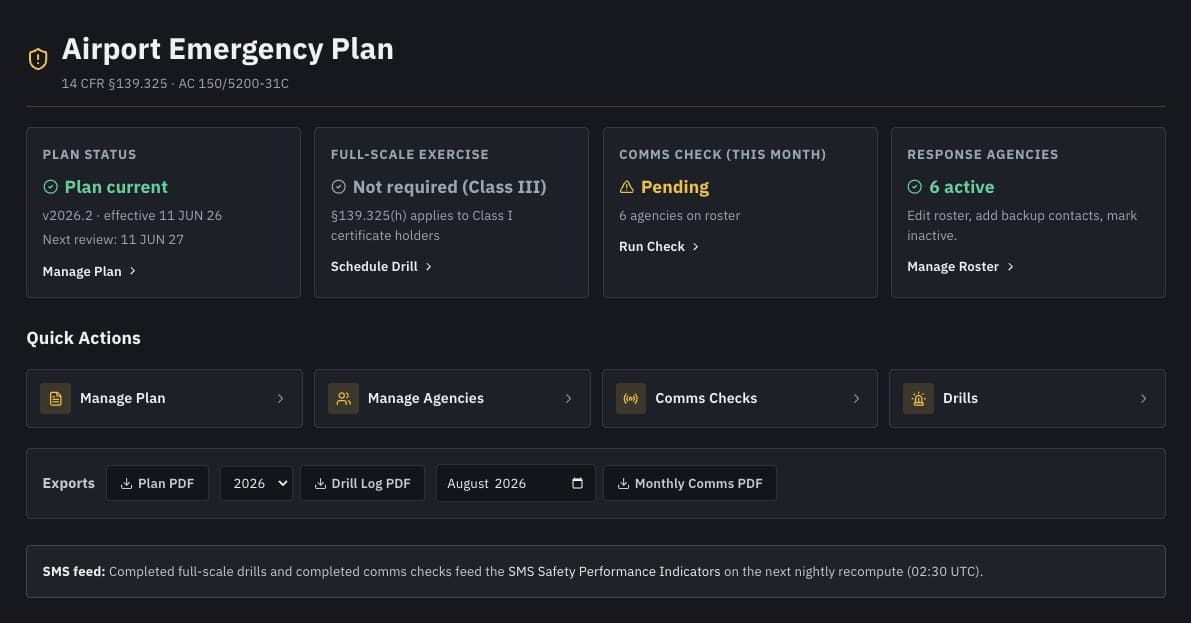
Version, effective date, and next annual review sit on the same card, so "current" is a fact on the screen instead of a question for whoever filed it last.
The full-scale exercise, tracked to its 36-month cycle
Last exercise date, days until the next one's due, and an overdue state that doesn't stay quiet on its own.
Monthly comms checks against the whole roster
Run the check, log any exceptions, and see at a glance whether this month's check is done or still pending.
Drills and comms checks feed the SMS record
A completed exercise or comms check rolls straight into the SMS Safety Performance Indicators on the next nightly recompute, instead of sitting in the AEP module alone.
What it automates
The 36-month clock runs itself
The next full-scale exercise date is computed and flagged overdue automatically, not tracked on a separate calendar somewhere else.
A monthly check that shows its work
Exceptions are logged against the full agency roster, so "complete" means every agency was reached this month.
The exercise record feeds safety, not just a file
Drills and comms checks roll into the SMS Safety Performance Indicators the same night, so the two programs stay in sync without a manual handoff.
Straight answers
How often does the full-scale exercise have to happen?
At least every 36 months under §139.325(h). The card shows the last exercise date, the target date for the next one, and flags it once it's due or overdue.
What counts as a completed comms check for the month?
Running the check against the response-agency roster and logging any exceptions. The card reads Pending until that's done for the current month.
Does the AEP module connect to anything else?
Yes. Completed drills and comms checks feed the SMS Safety Performance Indicators automatically on the next nightly recompute.
Can I export the plan and its exercise records?
Yes. The plan itself, a drill log by year, and a monthly comms-check log all export as PDFs.